
So, it’s been a few months. What a ride 2025 is turning out to be. At the end of July, we had decided to switch to end-of-month updates. But then August rolled by…and we had nothing to show. We put it off for too long until we finally realised, “Shit…we haven’t updated in months.” So, instead of stressing ourselves out, we’re returning to what worked: updates every three weeks.
Now, onto the project. For the last month or so, Harv and I have been humming and hawing about our goals for the game this year, and ultimately, we’ve decided it’s time for a perspective shift. We’re pivoting!
We’re no longer tying ourselves to a deadline like “end of this year.” The demo will be released when it’s ready. Our goal is to make something we can look at and appreciate for what it taught us—the satisfaction of finishing something and sticking with it even after the initial excitement fades.
I hesitate to say we want to make something we’re “proud of,” because that’s not the point of a training exercise. But we also don’t want to put out something that feels half-baked. It might still be a little janky, but at least we’ll know we didn’t rush it.
Another realisation: we’ve been making too many sacrifices in our day-to-day lives—dropping hobbies, staying up past midnight (slowly looks over at Harvey)—just to squeeze in progress. And honestly, that’s not fair to us or to the game. Imagine if we finished it, it flopped, and all we were left with was resentment about the things we gave up. I don’t want to work like that.
It’s all about balance, folks. And sometimes balance means adjusting, altering, and rearranging the furniture four or five times until it feels right. We need to remind ourselves that the furniture isn’t glued to the floor. Find what works for you. Feng shui that bitch.
What We’ve Been Working On
(Megan’s side) Artwise
In July, I had the chance to work on the concept art for one of the creatures I’m really excited to introduce in the future. He’s not very high on the priority list right now, but honestly, I think I’m more excited to work on him than almost anything else in the project.
I also finished one of the character portraits I had been working on:

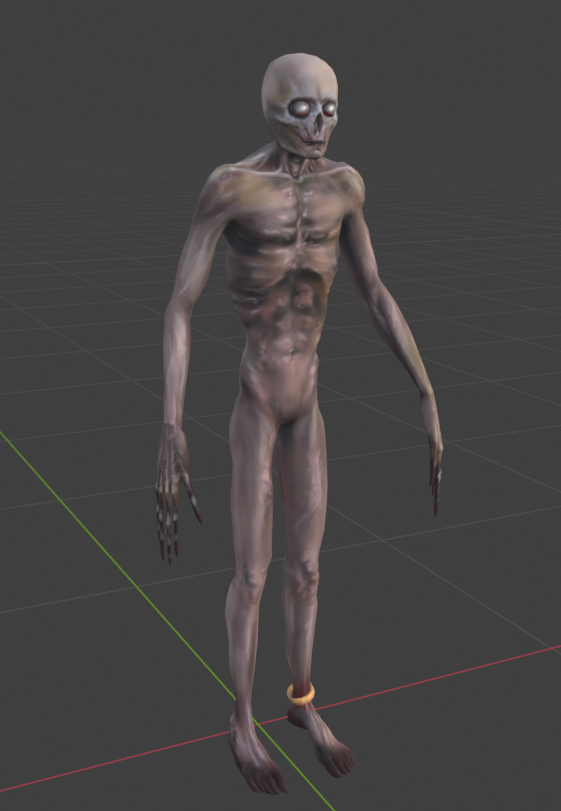
Next, the big one: In August, I tackled the 3D asset for one of our main enemies, The Scavenger.
This process made me realise that I have a long way to go when it comes to Blender. Every time I feel like I know what I’m doing, Blender hits me over the head and reminds me I’m dumb dumb🙂. He may look a little goofy right now, but with the right posing, animation, and lighting, he should look good in-game. We’ll share some of this in future.
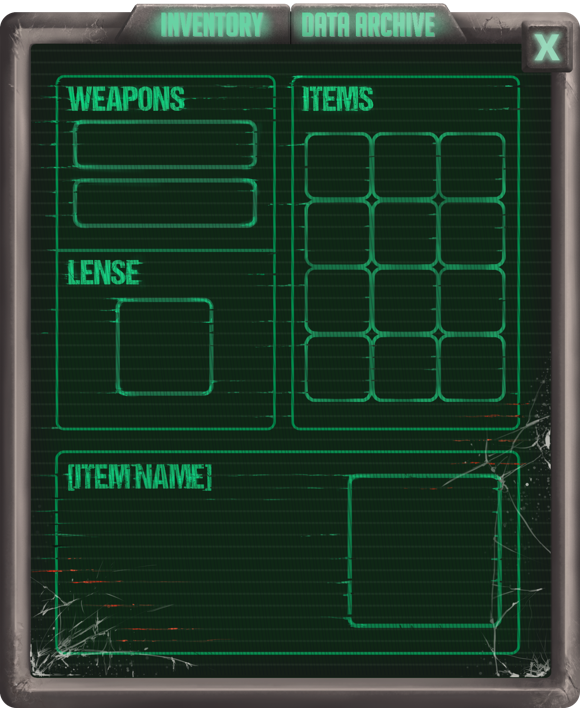
And finally—swinging to a completely different side of the game—I recently completed the UI for the Inventory. I’m very excited about the direction we’re going in and keen to see all the UI work together. My main focus right now is making sure everything works together cohesively.
(Harvey’s side) Dev work
Hello again!
It’s been a rough few months on my side work-wise. Between long hours, deployments, and our contract being dropped thanks to some good old corporate nonsense, progress slowed down more than I’d like. The silver lining is that I’ve been able to spend my days diving into new patterns for building web applications, and my evenings are once again open for gaming with friends and – most importantly – getting back into game development.
One of the trickier parts of game dev has been figuring out how to organise the project. With web apps, the structure is pretty standard: controllers go in a controllers package, services in services, and so on. Everything has its place, and the context is clear. Games, though, are a different beast. Lately, I’ve been experimenting with treating the project like a stage production:
- Actors → enemies, the player, and other “living” assets
- Props → weapons, inventory items, keys, and interactables
- Stage → level geometry and environments
This mindset has really helped break the project into clear, isolated sections while still keeping the bigger picture in focus. Development already feels more streamlined and manageable.
Over the past week, I wrapped up several lingering tasks, clearing the way for some bigger upcoming features. Here’s what’s done:
- Interaction system & item pickup functionality
- Flesh Mound behaviour
- Wall Screecher behaviour
- Item spawning
- Enemy spawning
- Scavenger rigging
- Dialogue system
On top of that, some really exciting news dropped – Godot 4.5 was released – and I wasted no time at all to transition the project over. The new features are a huge boost to workflow. Abstract classes in particular open the door for more polymorphic code (e.g., a battery is an inventory item, but not all inventory items are batteries – finally, some proper flexibility!).
Another welcome addition is the new Logger class, which lets us log errors and debug straight to the console with much clearer stack traces. It may sound small, but quality-of-life improvements like this add up fast when you’re deep in the weeds of development.
Lots more to come, but for now it feels great to hit a stride again.
What’s Next?
Art (Megan):
- UI for the Data Archive – I’ve done the Inventory so long. The Data Archive is like the codex of the game and is where you’ll find the Echo/Audio logs.
- UI for Main Menu buttons + tutorials.
- Portrait art for character we’ll be using in the ‘Opening Scene’ of the game.
- 3D asset for Shadow – the little we’ll be seeing of him in the demo.
- Concept Art for 2 more creatures – these are low on the priority list.
Mechanics/Development (Harvey):
Finite State Machines
Well, if it isn’t the bridge I said I would cross when I got to it. The next step is building the basic AI for our walking enemies, starting with the Scavenger. In the next dev blog, I’ll dive into how I’m approaching this with finite state machines and what that means for enemy behaviour in the game.
Spit and Polish
Before diving too deep into new features, I’ll be taking some time to go through the codebase and tighten things up—making sure everything follows a consistent standard and stays clean across different sections. It’s not the flashiest part of development, but keeping the foundation solid now saves a lot of headaches later.
